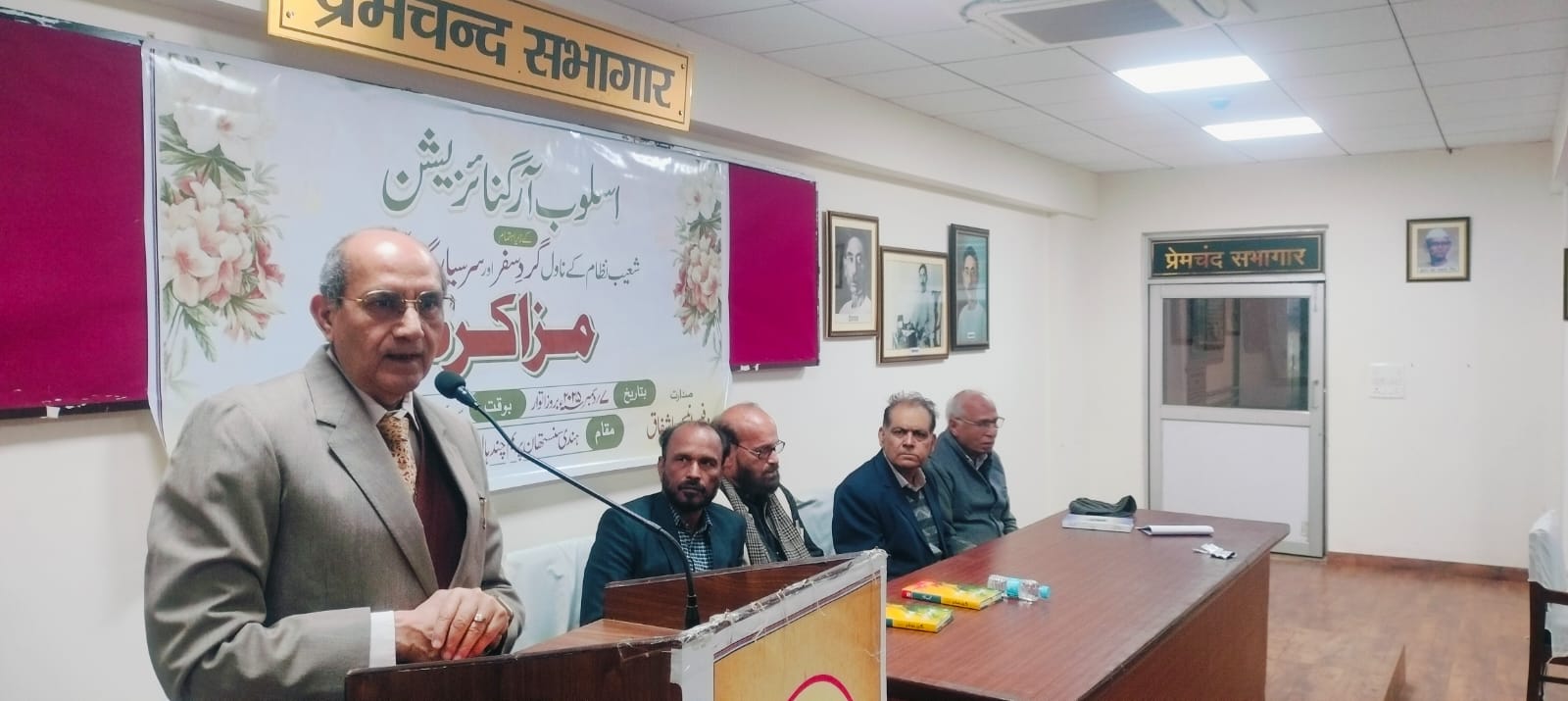
Lucknow: A literary discussion held in the city on Saturday delved deeply into the social and emotional upheavals surrounding the Partition era, as portrayed in the works of noted writer Shoaib Nizam. His novel Gard-e-Safar and the collection of sketches Sar-e-Sayyargaan-e-Sukhan were at the centre of an engaging seminar organised by Uslub Organisation at the Premchand Hall, Hindi Sansthan, Hazratganj.
Speaking as the chief guest, former IAS officer Dr. Anees Ansari emphasised that Nizam’s novel poignantly marks the turbulent conditions around Partition and the immense hardships faced by the community at the time. He noted that the narrative also carries a contemporary message—urging the younger generation to increase their participation in political processes. Citing a 2022 survey, Dr. Ansari highlighted that Pasmanda Muslims continue to remain among the most marginalised, underscoring the need for political awakening.
Presiding over the session, Dr. Anees Ashfaq, former Head of Department at Lucknow University, shed light on the creative depth of Nizam’s writing. He described the 242-page novel as a vivid portrayal of rural life and culture, capturing subtle nuances while moving briskly through the storyline. He noted that the novel reflects both the fears emerging from changing times as well as the ray of hope that persists amid uncertainty.
From Kanpur, Dr. Gulreza Adeeba praised the powerful imagery in the novel, observing that the story highlights the swift passage of time and the evolving psyche of its characters. Distinguished writer Dr. Ayesha Siddiqui added that although the female characters appear strong, the narrative subtly reveals how women have long been suppressed and burdened by social structures.

Calling Shoaib Nizam a “magician of words,” Shakeel Siddiqui remarked that the novel fully meets the expectations of quality fiction, with every character crafted with remarkable clarity and depth. Earlier, the author shared anecdotes from his interactions and literary gatherings with writers such as Naiyer Masood, offering insights into his creative journey.
Discussing Nizam’s collection of 24 sketches, Dr. Umair Manzar said the book brings alive a Lucknow that has nearly disappeared, presenting a rich canvas of literary vibrancy. Writer Sabahat Afreen was appreciated for her fluid and expressive language throughout the sketches.
The event saw enthusiastic participation from literature lovers, researchers and academicians. Conveners Shahid Akhtar and Zafar Ghazi, along with attentive listeners including Pratul Joshi, Mahendra Pathak and Divya Ranjan, were present. Attendees described the seminar as an important platform that not only deepened understanding of contemporary Urdu narratives but also connected them meaningfully with traditional literary roots.